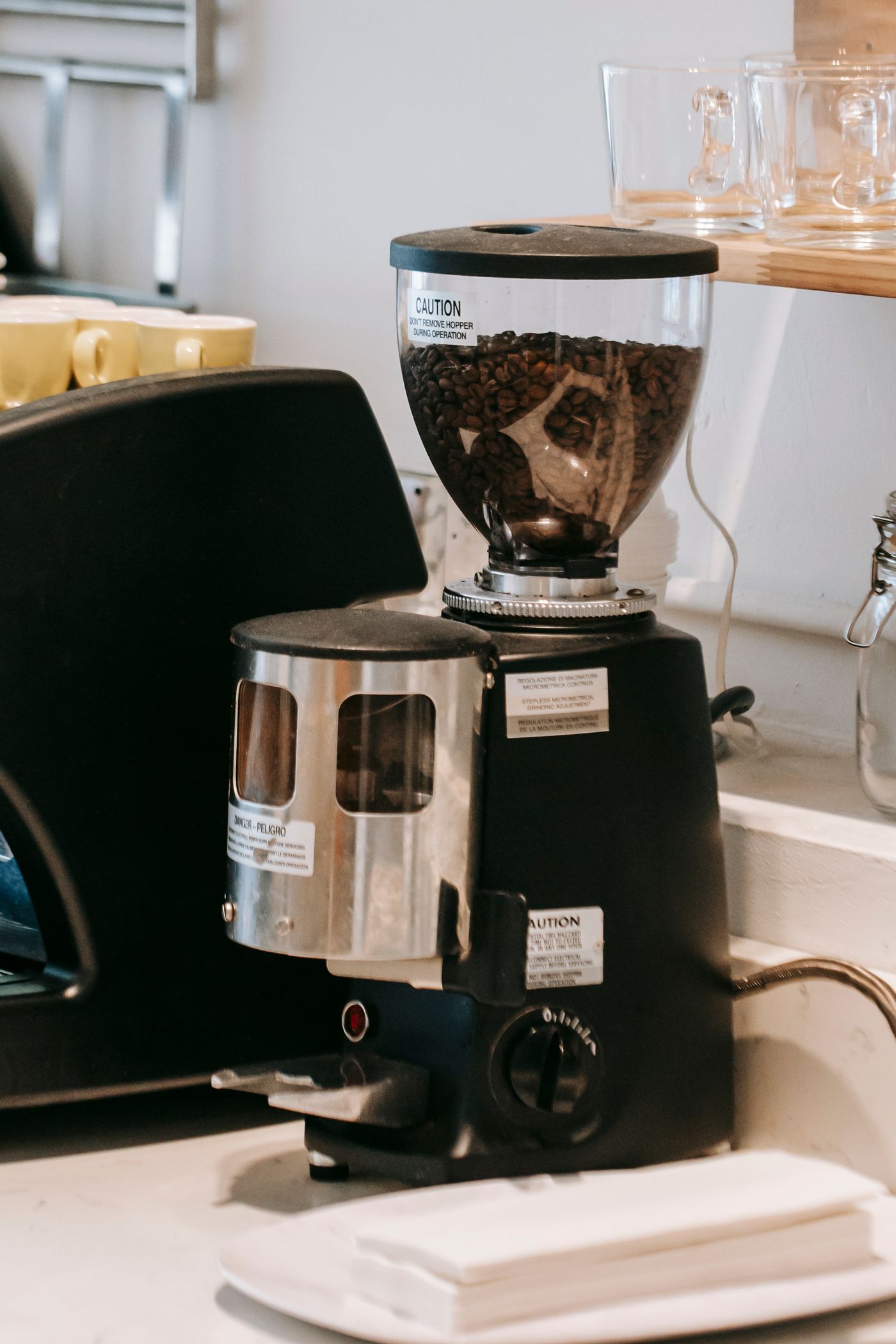
A grinder changes the coffee you can make more than many decorative upgrades. For home brewing, the useful questions are consistency, adjustment range, retention, noise, and whether the workflow is pleasant enough to repeat every morning.
Burrs, not marketing numbers
Burr grinders crush beans between two surfaces, giving you more control than a basic blade grinder. Conical and flat burr designs can both produce excellent results; the surrounding alignment, adjustment system, and motor also matter. Do not choose solely by the number of grind settings. A smaller set of repeatable steps can be more useful than a dial that is difficult to return to the same point.
| Factor | Look for | Why it matters |
|---|---|---|
| Adjustment | Clear steps or a repeatable dial | Makes recipes easier to reproduce |
| Retention | Accessible chute and simple purge | Reduces stale grounds and waste |
| Capacity | Hopper or single-dose workflow | Matches how much coffee you brew |
| Noise | Short, steady grinding cycle | Important in shared homes |
Match the grinder to your brew methods
Drip and French press need a usable coarse-to-medium range. Pour-over rewards fine control because small changes can alter drawdown. Espresso demands a much narrower, more precise range and usually benefits from a grinder designed for that job. If you switch methods often, prioritize an adjustment system that is easy to move and return to, rather than buying the largest hopper.
Workflow details that matter every day
- A removable burr or tool-free access simplifies cleaning.
- A grounds cup that does not scatter coffee keeps the counter calmer.
- A timer or dosing routine helps repeatability, but a scale still matters more.
- Static and retention vary with beans and humidity; plan for a small brush.
Keep beans sealed, change one variable at a time, and record a simple recipe. The grinder is part of a system that includes water, dose, and technique.
FAQ
Is a more expensive grinder always better?
Not for every brewer. Paying for precision you never use adds cost without improving the cup. Spend on the adjustment range and workflow you will actually use.
How often should it be cleaned?
Brush loose grounds regularly and follow the manufacturer’s deeper-cleaning guidance. Oily beans may require more frequent attention.
Bottom line: buy for repeatable settings and a workflow you will enjoy. Consistency beats a specification sheet full of impressive but unused features.