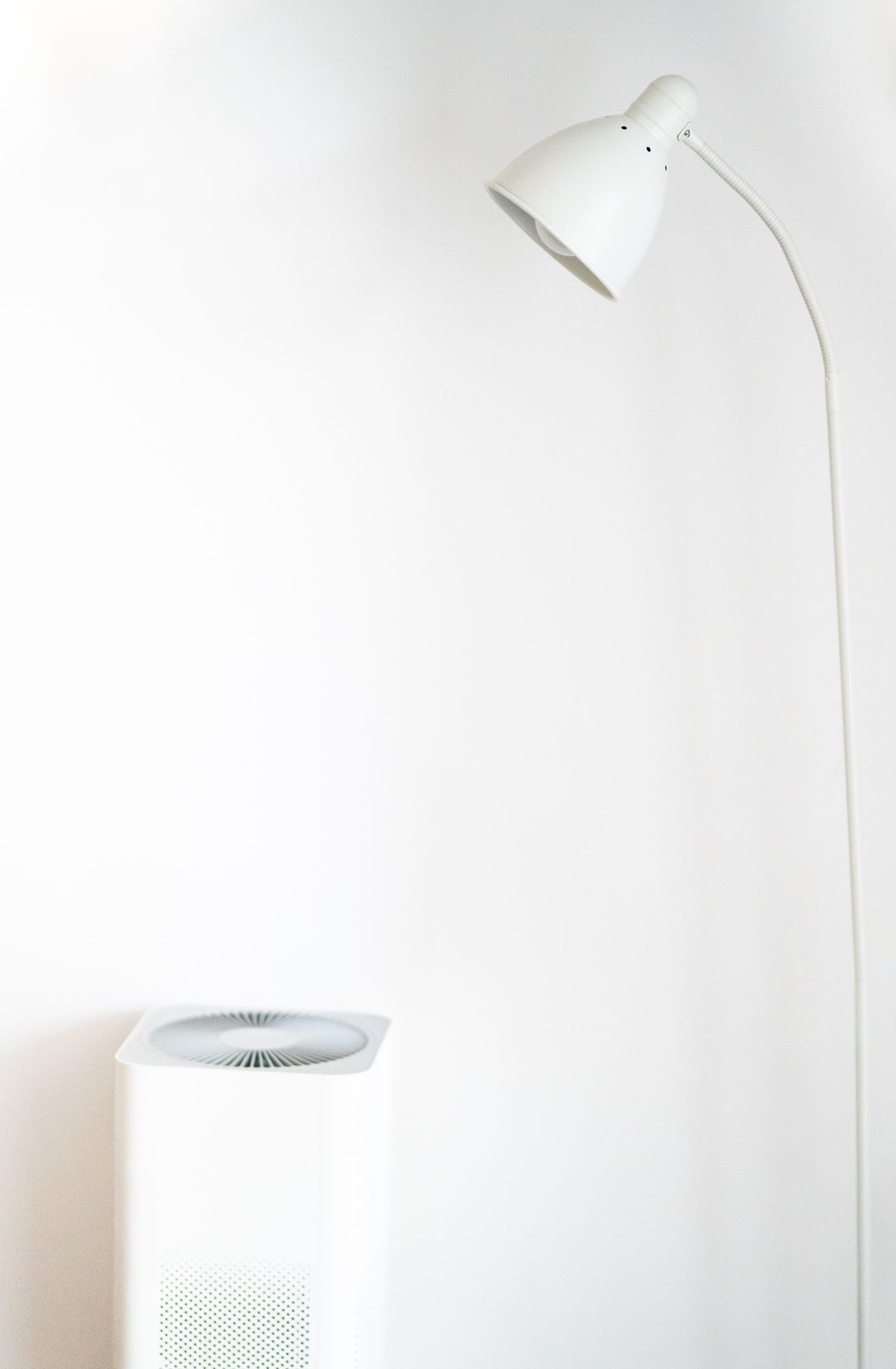
A bedroom purifier should disappear into the routine: quiet enough to run overnight, simple enough to maintain, and sized for the room rather than the marketing headline. The most useful comparison is not maximum airflow alone, but how much clean air you get at a noise level you can live with.
Size the purifier for the room
Measure the bedroom and compare its area with the manufacturer’s recommended room size. If ceilings are high, doors stay open, or allergies are a major concern, leave extra headroom. A unit running on its lowest setting may be quiet, but it also moves less air; a little capacity reserve lets you clean faster after cooking, cleaning, or an open-window day.
Noise is a performance specification
Look for a published noise range, not only a “sleep mode” label. Consider the sound at the middle setting because that is often where the purifier spends most of its time. Fan tone matters too: a steady low hum is easier to ignore than a high-pitched whine. Controls that dim or turn off display lights are small features with a large overnight payoff.
| Comparison point | What to look for | Practical question |
|---|---|---|
| Airflow | Usable clean-air rate, not just room-size claim | Can it refresh the room without running at maximum? |
| Filter | True replacement price and availability | Will annual upkeep fit the household budget? |
| Controls | Timer, auto mode, display dimming | Can it run quietly while you sleep? |
| Footprint | Intake and exhaust clearance | Will furniture block airflow? |
Filter types and ongoing cost
A particle filter handles dust, pollen, and other airborne particles. An activated-carbon layer can help with some odors, but its effectiveness depends on the amount and quality of carbon. Plan for replacement filters before buying: a low sticker price can become expensive if proprietary filters are hard to find. Vacuuming the pre-filter, when the design allows it, can reduce dust loading and extend the main filter’s useful life.
Placement and daily use
- Leave clear space around the intake and exhaust.
- Keep the unit away from curtains, bedding, and damp areas.
- Use auto mode only if its sensor behavior is predictable in your room.
- Change filters on condition or the manufacturer’s schedule; do not wait for a smell.
Purifiers are not a substitute for ventilation, source control, or professional help for persistent mold. They are one layer in a broader indoor-air routine.
FAQ
Should a purifier run all night?
For most bedroom use, continuous low operation is the simplest routine if the noise is comfortable and the filter is maintained.
Do ionizers matter?
They are not essential to a good bedroom purifier. Prioritize airflow, filtration, noise, and transparent replacement costs first.
Bottom line: choose a quiet, appropriately sized model with filters you can realistically replace. A modest unit that runs consistently is more useful than an oversized one that stays switched off.