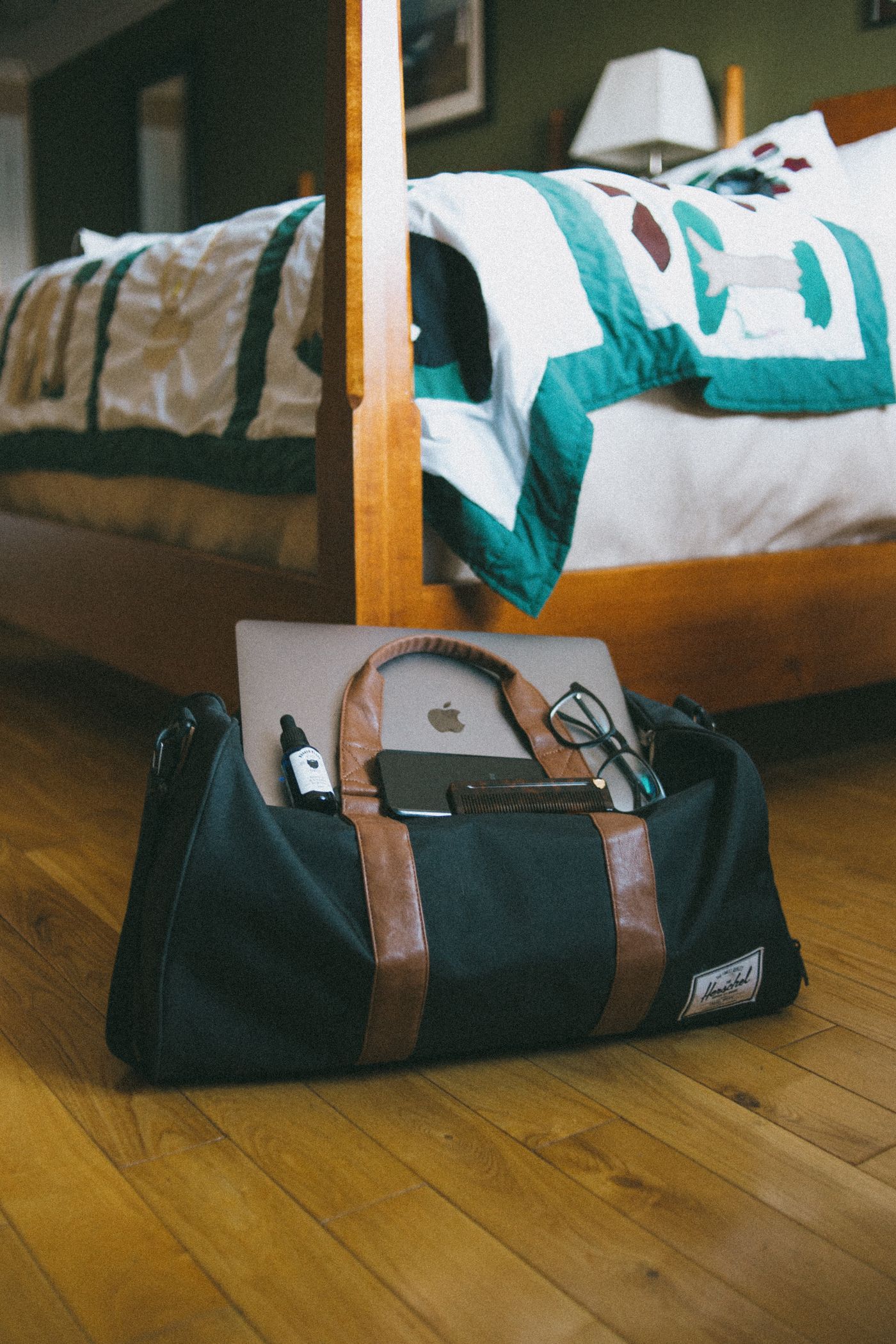
The best travel tech kit solves predictable problems without filling your bag with duplicates.
Start with one charging system
Use a charger with enough power for your laptop or tablet and include the right cables for your phone and headphones. A short cable is easier to manage in an airport seat.
Bring a power bank for transitions
Choose a capacity that fits your airline rules and your actual devices. A smaller bank is easier to carry, while a larger one can be useful on long travel days. Check the outputs before buying.
Protect your data
Turn on device passcodes, back up important files, and avoid plugging into unknown public USB ports. A travel router or local eSIM can be useful depending on your destination and work needs.
Pack the kit together
Keep chargers, adapters, and cables in one small pouch. Label similar cables and remove anything you did not use on the last trip.
Bottom line
Build around the devices you already own. A small, predictable kit is easier to remember and more useful than a bag of spare accessories.
Build the kit around real connections
List every device you carry, then choose one charger and only the cables that fill a real gap. Check output wattage, airline power-bank rules, and whether your destination needs an adapter or eSIM. Turn on passcodes, device tracking, and backups before leaving; unknown public USB ports are not worth the risk.
| Need | Verify | Mistake to avoid |
|---|---|---|
| Charging | Power and cable compatibility | Assuming one port fast-charges all |
| Connectivity | Offline maps or eSIM | Testing only on arrival |
| Security | Backups and passcodes | Using public USB ports |
FAQ
Airline limits vary, so check the current carrier policy for power banks. A travel router is optional; simpler connectivity may be enough.
Bottom line: pack a small, tested system that protects data and covers the devices you actually use.